What a Soft Brake Pedal May Be Telling You
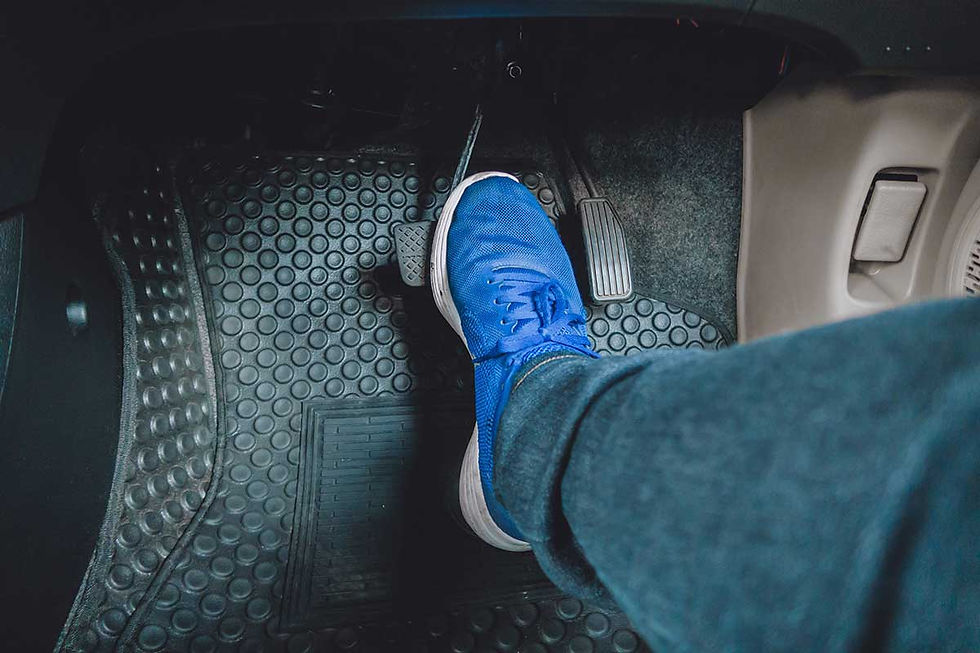
A soft or sinking brake pedal deserves attention in any season. Summer heat sometimes gets the blame, but ambient temperature matters far less than the condition of the fluid and the amount of heat generated during braking.
Heat From the Air Doesn't Boil Brake Fluid
Brake fluid boils in the hundreds of degrees Fahrenheit. A 90-degree afternoon doesn't get a braking system anywhere near that range on its own, and idling in traffic with your foot resting on the brake doesn't generate meaningful heat either. Heat comes from friction between the pads and rotors during active braking, not from a pedal held steady at a stop.
What generates real heat is sustained, heavy braking: towing, repeated hard stops, or riding the brakes down a long grade. That kind of use is what can expose fluid whose heat resistance has already declined. The outside temperature is not the driving factor.
How Brake Fluid Loses Its Heat Resistance
Brake fluid used in most passenger vehicles is glycol-based, and glycol-based fluid is hygroscopic. It absorbs moisture from the air gradually, through hoses, seals, and the reservoir cap, for as long as it stays in the system. That moisture is the variable that matters most, lowering the fluid's boiling point over time regardless of the season.
Some vehicles use a different fluid entirely, such as a silicone or mineral-oil based system, and the same moisture concern doesn't apply the same way to those. Always use the fluid type specified in the owner's manual or on the reservoir cap rather than a general assumption about what most cars take.
What the Federal Boiling Point Standards Say
Federal Motor Vehicle Safety Standard No. 116 sets minimum boiling points for brake fluid sold in the United States. New DOT 3 fluid has to resist boiling to at least 401°F, measured dry. DOT 4 is rated higher, at 446°F dry.
The standard also requires a wet boiling-point rating. To establish it, brake fluid is humidified under controlled laboratory conditions using a separate reference fluid to determine when the conditioning process is complete. The result is a standardized comparison, not an estimate of how much moisture is in the average vehicle's brake fluid. At that standardized conditioning point, DOT 3's minimum wet boiling point is 284°F and DOT 4's is 311°F. The wet rating provides a useful benchmark for fluid that has absorbed moisture, although it does not represent the exact condition of every vehicle's fluid. Climate, system condition, and service history can all affect how the fluid changes over time.
What a Soft or Sinking Pedal May Indicate
A soft or spongy pedal has more than one possible cause, and fluid condition is only one of them. Air trapped in the hydraulic lines, a leak at a caliper or brake line, a failing master cylinder, or fluid whose boiling point has dropped enough to let vapor form under hard use can all produce a similar feel.
A pedal that firms up when pumped but soon softens again can indicate air or another hydraulic-system problem.
Dark or discolored fluid in the reservoir is worth noting, but color alone doesn't confirm what's wrong.
A pedal that sinks slowly toward the floor under steady pressure is different, and it can signal a hydraulic failure. If the pedal sinks toward the floor, braking ability has noticeably declined, or the brake warning light remains on after the parking brake is released, stop driving and arrange for the vehicle to be inspected safely rather than continuing on to a repair shop.
The only reliable way to tell these causes apart is a proper inspection.
Follow Your Vehicle's Own Schedule
There is no single brake fluid interval that applies to every car. Some manufacturers specify replacement on a fixed schedule. Others call for inspecting the fluid at set intervals and replacing it only if testing shows it needs it. The right interval for any specific vehicle is the one in its owner's manual. A repair shop can check the manufacturer's maintenance information for the specific year, make, and model.
Brake Inspections at Sonny's Auto Repairs in Hicksville, NY
If the pedal feels softer, spongier, or slower to respond than it used to, have the braking system inspected promptly. A complete inspection can determine whether the cause is the fluid, air in the system, a leak, or another hydraulic problem.
Call 516-822-3671 or stop by 499 East Old Country Road in Hicksville, NY 11801. Open Monday through Friday, 8 am to 5 pm, and Saturday, 8 am to 12 pm.


Comments