The New York State Inspection Checklist for Hicksville Drivers

Your inspection sticker runs through the last day of the month punched on it. That gives you the whole month to work with, and the drivers who use the first three weeks of it have room to fix something small and come back. A good share of what an inspector looks at, you can look at yourself tonight.
Check These in Your Driveway Tonight
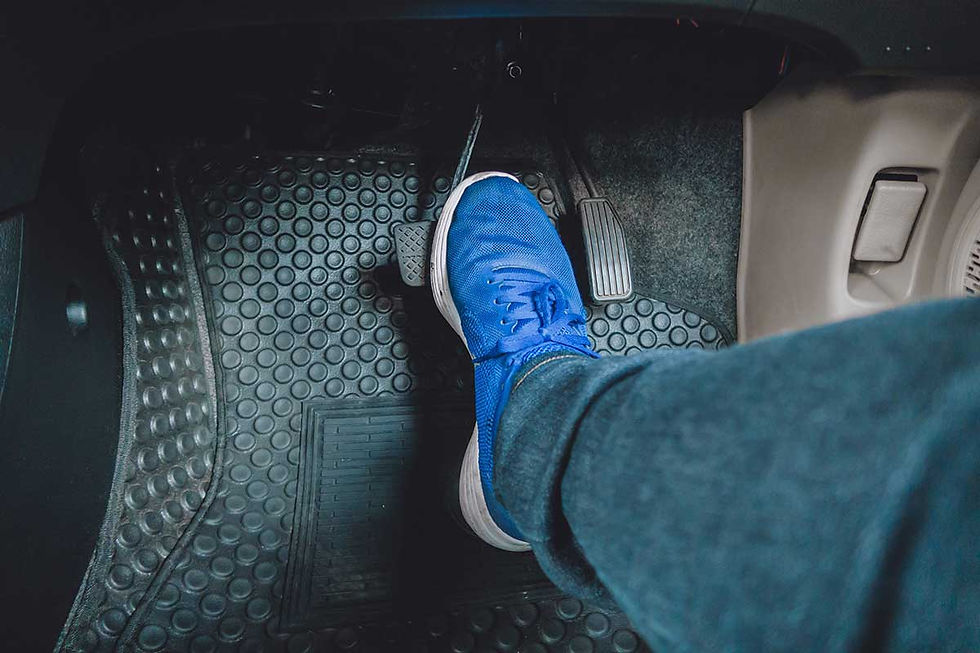
Every light. Headlamps on low and high beam, tail lamps, brake lights, turn signals, backup lights, four-way flashers, and the license plate lights. Have someone stand behind the car while you work the pedal, the stalk, and reverse.
Wipers and blades. Both have to be present and working, and the blades have to be in good condition.
Tread depth. It needs at least 2/32 inch in two adjacent major grooves at the most worn spot. Most tires have wear bars molded into the grooves at that depth, so tread worn flush with them is at the limit. A penny checks it too: insert it with Lincoln head down, and if the top of his head stays visible, the tread is at or below 2/32 inch.
Windshield cracks. A crack 11 inches or longer fails if any part of it sits inside the area the wipers clear. A crack of the same length low in the corner, outside that sweep, is treated differently.
Front window tint. On 1992 and newer vehicles, the windshield below its top six inches and the side windows beside or ahead of the driver must allow at least 70 percent of visible light through. Non-reflective tint is permitted on the upper six inches of the windshield. New York has included tint checks in annual inspections since 2017.
The horn, the mirrors, and the seat belts at every seating position on a 1969 or newer vehicle.
Any fuel leak that drips or pools.
What the Inspector Checks That You Can't
Much of the rest of the safety inspection calls for shop access and a closer mechanical look. An inspector removes at least one front wheel to check the brakes. The pedal has to hold without fading, and the car has to stop straight without pulling. Lines, hoses, calipers, and the master cylinder all get checked for leaks.
The steering and suspension group covers wheel free play, tie rod ends, the idler arm, wheel bearings, shocks, springs and torsion bars, and the frame where the suspension attaches to it. Power steering operation, belt condition, and leaks belong to that group as well, along with the wheel fasteners.
Two Items the Inspector Mentions Without Failing You
An airbag warning lamp that's lit or burned out gets noted on your report. So does tire pressure outside the manufacturer's recommendation. New York lists both as advisements, which means the inspector tells you about them and the sticker goes on anyway.
Neither will fail the inspection, but both are still worth addressing. An airbag warning lamp can indicate a restraint-system fault that may affect how the system operates in a crash, and correct tire pressure buys you tread life and fuel economy.
The Emissions Side, and Who Skips It
Most newer gasoline vehicles and light-duty diesels receive an OBDII emissions inspection at the same visit. New York generally applies it to 1996 and newer gasoline vehicles and many 1997 and newer diesels under 8,501 pounds GVWR, subject to the exemptions below. The test confirms the check engine light works, notes whether it's illuminated, and reads the results stored in the engine computer. On gasoline vehicles, the inspector also checks the gas cap. The emissions equipment the car was built with has to be present and connected: catalytic converter, EGR valve, PCV system, air injection, evaporative controls, fuel inlet restrictor, and thermostatic air cleaner.
Several categories skip the emissions test: motorcycles, vehicles less than two model years old, vehicles more than 25 model years old, electric vehicles, and cars with historical plates. Electric owners still need the annual safety inspection.
For vehicles subject to emissions testing, DMV needs a record of a passed emissions inspection within the previous 12 months before the registration can be renewed.
Check Engine Light Off, Monitors Not Ready
A car can arrive with a clean dash and still come back as a failure, and readiness monitors are the reason. The OBDII system runs a series of self-tests, usually around ten monitored systems depending on the vehicle, and each reports whether its test has completed. For 2001 and newer vehicles, New York generally allows one monitor to remain not ready and still pass. Readiness monitors may be incomplete after diagnostic codes are cleared, the battery has been disconnected or replaced, or certain repairs have reset the vehicle's onboard computer.
Clearing codes shortly before an inspection can work against you for that reason. If an unready monitor is the only thing between the car and a sticker, and the old sticker has expired, the inspector's computer issues a 10-day extension. Finishing the monitors takes a drive cycle, a mix of cold start, steady highway speed, and coasting that varies by make and model.
If the Car Doesn't Pass
You choose where the repair happens. State rules let you have the work done at any shop, or do it yourself, and then take the car to any inspection station for the new sticker.
Timing is where it gets expensive. A sticker expired within 60 days carries a fine of $25 to $50. Past 60 days it runs $50 to $100. A mandatory state surcharge of $88 gets added on top, or $93 in town and village courts. A parked car with an expired sticker can be ticketed too. Going in during the first three weeks of your month leaves room for a repair and a return trip inside the window.
New York State Inspections at Sonny's in Hicksville
Sonny's Auto Repairs handles New York State inspections at 499 East Old Country Road. Come in before the last week of your sticker month, and a repair still has time to happen before the sticker runs out.
Call 516-822-3671. Open Monday through Friday, 8 am to 5 pm, and Saturday, 8 am to 12 pm.
Source: New York State DMV, Vehicle Safety/Emissions Inspection Program and About New York State Inspections

Comments